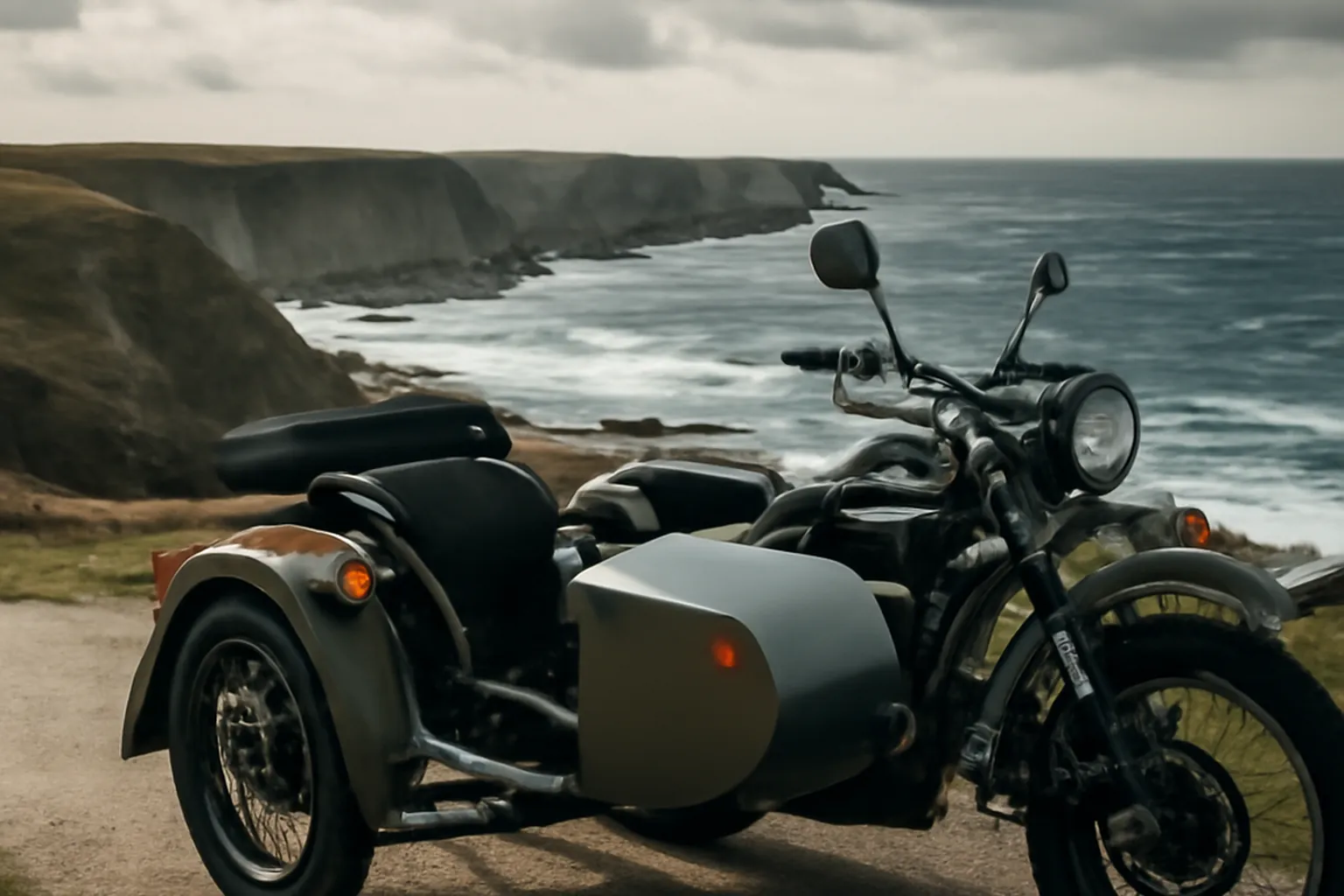
From Alsace to the Pyrenees, through the Massif Central and Brittany: five itineraries designed for Ural sidecar travel, with the secondary roads to prioritise and the unmissable stops.
How We Selected These Itineraries
These five itineraries were selected according to three criteria: road quality (surface, traffic, scenery), accessibility for a sidecar (avoiding excessively winding roads or extreme camber) and richness of stops. Each itinerary has been tested or validated by Club Ural France community members.
They are presented from simplest to most demanding. All are achievable with a well-maintained Tourist or Gear Up.
Key takeaway: These five itineraries are ordered from simplest (Alsace Wine Route, wide roads and gentle gradients) to most demanding (Pyrenean passes, requiring a mechanically sound Ural and an experienced rider). Match the route to your experience level before your machine’s, not the other way around.
Itinerary 1 — The Alsace Wine Route (3-4 days, 350 km)
Start: Strasbourg — End: Colmar (or Mulhouse)
The Alsace Wine Route is perfect for a first sidecar journey: wide roads, little gradient, numerous gastronomic stops and varied accommodation at all budgets.
Key stages:
- Strasbourg → Obernai (50 km): first night in the medieval town
- Obernai → Ribeauvillé (40 km): through the vineyards, visit Haut-Koenigsbourg castle
- Ribeauvillé → Kaysersberg (25 km): preserved village, half-timbered houses
- Kaysersberg → Colmar (15 km): visit the “Little Venice” of Alsace
Ural tip: Avoid the main D422 road in summer (heavy traffic). Prefer village-to-village roads (D35).
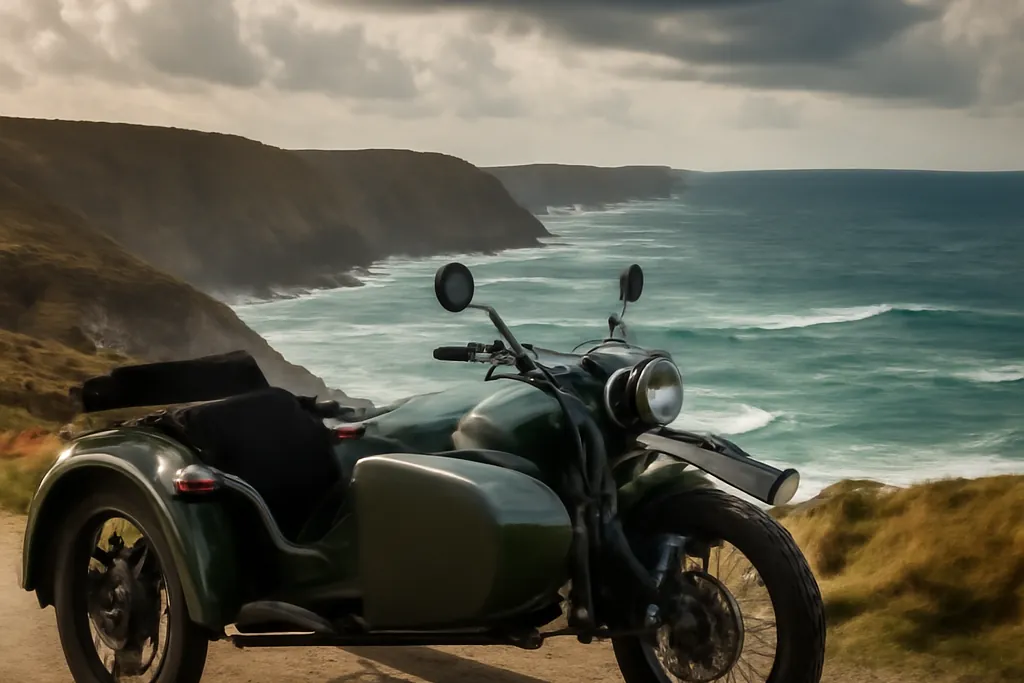
Itinerary 2 — The Grand Brittany Tour (7-8 days, 1,200 km)
Start/End: Rennes
Brittany is ideal terrain for Uralists who love maritime landscapes and coastal roads. Surface is generally good, traffic moderate out of season (May-June).
Key stages:
- Rennes → Mont-Saint-Michel → Cancale (120 km): maritime opening
- Cancale → Saint-Brieuc along the Emerald Coast (90 km)
- Saint-Brieuc → Brest via Pink Granite Coast (160 km)
- Brest → Pointe du Raz → Quimper (100 km)
- Quimper → Lorient → Vannes (130 km): inland Brittany
- Vannes → Rennes (115 km): return via the moors
Ural tip: Bring rain gear. Brittany is beautiful even under clouds, but persistent moisture demands appropriate equipment.
Itinerary 3 — The Wild Massif Central (8-10 days, 1,600 km)
Start: Clermont-Ferrand — End: Mende
This is the favourite itinerary of many French Uralists. Little mass tourism, excellent road conditions, wild scenery and variable weather that adds to the adventurous character.
Key stages:
- Clermont-Ferrand → Issoire → Brioude (90 km): Allier valley
- Brioude → Le Puy-en-Velay (70 km): cathedral on volcanic rock
- Le Puy → Aubrac plateau → Marvejols (180 km): exceptional Aubrac plateau
- Marvejols → Tarn Gorges → Millau (110 km): viaduct, cliffs
- Millau → Causses → Florac (90 km)
- Florac → Mont Aigoual → Le Vigan (60 km)
- Le Vigan → Ganges → Montpellier (80 km)
Ural tip: The Aubrac can still have snow in May. Check weather before venturing there.
Itinerary 4 — Secret Provence (5-6 days, 800 km)
Start: Avignon — End: Marseille
Avoid the crowded coastal roads and explore inland Provence: Luberon, Verdon, Alpilles.
Key stages:
- Avignon → Gordes → Roussillon (70 km): ochres and perched villages
- Roussillon → Forcalquier → Moustiers-Sainte-Marie (120 km)
- Moustiers → Verdon Gorges (80 km loop): caution on narrow roads
- Verdon → Manosque → Aix-en-Provence (100 km)
- Aix → Alpilles → Les Baux-de-Provence → Arles (90 km)
- Arles → Camargue → Marseille (120 km)
Ural tip: The Verdon Gorges include sections with 10-15% gradient and very tight bends. Take your time; the Gear Up 2WD isn’t required but descent mastery is essential.
Itinerary 5 — The Pyrenean Foothills (8-9 days, 1,300 km)
Start: Bayonne — End: Perpignan
The Pyrenean foothills offer the most varied landscapes: Atlantic coast, Basque hills, Béarnais forests, central Pyrenees, Languedoc.
Key stages:
- Bayonne → Saint-Jean-de-Luz → Saint-Jean-Pied-de-Port (80 km)
- Saint-Jean-Pied-de-Port → Oloron-Sainte-Marie (70 km)
- Oloron → Col du Pourtalet → Laruns (70 km) — weather permitting
- Laruns → Lourdes → Tarbes (60 km)
- Tarbes → Bagnères-de-Bigorre → Gavarnie (80 km) — excursion to the cirque
- Gavarnie → Saint-Gaudens → Saint-Girons (100 km)
- Saint-Girons → Foix → Ax-les-Thermes (80 km)
- Ax → Quillan → Limoux → Carcassonne (120 km)
- Carcassonne → Perpignan (90 km)
Ural tip: Pyrenean passes (Pourtalet, Tourmalet) are spectacular but require an Ural in perfect mechanical condition and an experienced rider. Avoid these passages before June and after October.
Practical Tips Common to All Itineraries
Whatever route you choose, here are the golden rules of Ural sidecar travel in France:
- Plan 200-300 km per day maximum — sidecar fatigue is real
- Book ahead in season — charming accommodation fills quickly
- Carry a light tow rope — motorcyclist solidarity is priceless
- Check Ural France forums before each itinerary — local members know the best addresses and pitfalls
- Document your journey — photos of the Ural in landscapes invariably attract smiles and conversations
To prepare your Ural before departure, see our complete mechanical maintenance guide.
Frequently Asked Questions
May, June, September and October are ideal: moderate temperatures, lighter traffic and beautiful photographic light. July-August are possible but coastal and tourist routes become congested. Winter (December-February) is inadvisable except for Mediterranean regions.
Yes, standard handlebar GPS mounts adapt to the Ural. Prefer dedicated motorcycle GPS (Garmin Zumo, TomTom Rider) over smartphones which suffer from engine heat and vibration. For complex routes, download offline maps.
Wild camping (bivouac) is legal in France on uncultivated land outside state forests and protected zones. The Ural Gear Up is particularly well-suited to bivouac thanks to its loading volume and access to difficult terrain. Respect the 'leave no trace' principle.
Sidecars use standard toll booths. Depending on weight and configuration, pricing varies: some motorway networks classify heavy sidecars as category 1 (motorcycle), others as category 2 (car). Check with the operator or pre-pay with an appropriate category badge.
The Ural dealer network in France is limited to around ten authorised outlets. Major cities (Paris, Lyon, Bordeaux, Strasbourg, Toulouse) generally have a dealer or specialist workshop. For remote regions, carry a basic breakdown kit and identify the nearest general motorcycle mechanics.