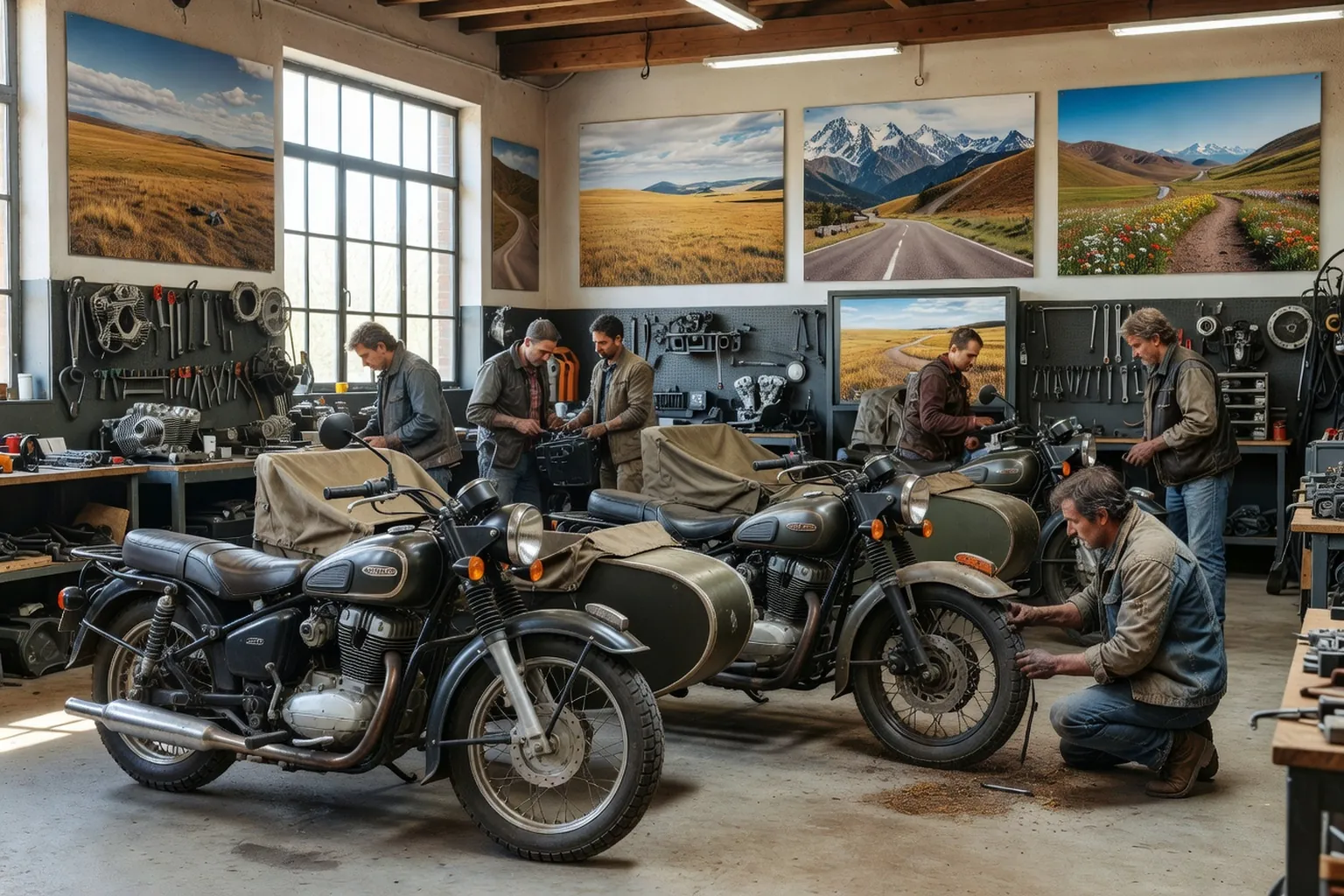
Meeting with Éric Marchetti, manager of the Ural Lyon Sidecar workshop since 2014. Between confidences on buyers, mechanical anecdotes and a lucid look at the brand's challenges, an unfiltered portrait of the French market.
Interview conducted by Sophie Renaud, Ural-France editorial team.
Installed in a former converted textile factory in Villeurbanne, Éric Marchetti is one of just a handful of authorised Ural dealers in France. His space blends parts storage, a display area for new and used models, and an open workshop where two mechanics work simultaneously on several machines. The atmosphere sits somewhere between a vintage garage and a discreet showroom.
Éric Marchetti: By accident, as often happens in this trade. I spent ten years in motorcycle racing, on the mechanical side, then opened a general workshop. A customer brought me a 2010 Ural Tourist for a service — an old carburettor machine giving him trouble. I spent two days on it. And I loved it. That stripped-down, accessible mechanics with genuine internal logic. I started training, contacted the official importer, and in 2014 obtained authorised dealer status.
EM: We’ve moved from something very confidential — insiders exchanging addresses on obscure forums — to something far more visible. Social media has played an enormous role. Instagram particularly. Photos of Urals in wild landscapes struck a chord with people who’d never have searched “sidecar” in their browser. I now get calls from people who saw a photo on their phone and want “that motorcycle”. It’s a complete paradigm shift.
New sales have increased consistently since 2020. The Covid years were paradoxically good for us — people were looking to travel differently, distance themselves from crowds, slow down. The Ural ticked all those boxes.
EM: Considerably. My historical buyer was the 55-year-old enthusiast who’d grown up around military sidecars, who had one or two bikes in the garage and wanted to add an Ural to the collection. Still present, but no longer the majority.
Today I see many couples between 35 and 45. A frequently cited pattern: he’s been riding motorcycles for years, she doesn’t like riding pillion (uncomfortable position, feeling of insecurity), but in the sidecar she feels fine. And it opens a world of shared travel they wouldn’t otherwise have had. It’s a genuine commercial argument I always highlight.
I also see younger people — 28-35 — with a slow travel mindset, wanting something authentic, rejecting the omnipresent electronic assistance on modern motorcycles. The Ural answers this better than any other machine.
EM: In order: “Does it break down?”, “What licence do I need?”, “Can my wife ride it?” and “What’s the annual maintenance cost?”
On reliability: I’m honest. Pre-2010 Urals were temperamental. Today’s machines are adequate — not at BMW level, but adequate for reasonable use. You must do the maintenance; you can’t leave the machine sitting for six months.
On licences: most clients don’t know that a standard car licence is sufficient. It’s consistently a pleasant surprise.
On female riders: yes, absolutely. I have female clients who ride the Ural and put their husbands in the sidecar. It’s not physically harder for women.
On maintenance: doing oil changes themselves, my clients spend €300-500/year. Handing all maintenance to me: €700-1,200/year depending on mileage.
EM: Delivery times. The Irbit factory produces 500-800 machines per year for the entire world. In 2025, I had clients waiting 4-6 months for a specific configuration. That’s a long time. Impatient clients move on to something else.
Parts for older machines (pre-2005) are increasingly hard to find. I’ve built up significant stock over the years, but certain body panels or gearbox components no longer exist new.
And the geopolitical situation sometimes complicates supply chains. We adapt, but it’s not always straightforward.
EM: Come spend a day with me. Try the machine on the road. Ask all your questions. I can also put you in touch with current owners who live near you — Club Ural France does this very well. Meet people who’ve been living with an Ural daily for 5 or 10 years. Their testimony is worth more than any commercial argument.
The Ural isn’t for everyone. For those it suits, it’s often the machine they never imagined they’d love so much.
Key takeaway: According to dealer Éric Marchetti, the French Ural buyer profile has shifted sharply since 2020 — from solo enthusiasts in their fifties to couples aged 35-45 seeking a shared travel alternative. The main bottleneck today isn’t demand but factory lead times, with waits of 4-6 months for specific configurations.
Ural Lyon Sidecar, Villeurbanne (69). By appointment, contact details available on the official Ural France distributor website.
Find more guides in our mechanical maintenance page and used Ural buying guide.
Frequently Asked Questions
The French market represents between 60 and 100 new units per year depending on the year, with an upward trend since 2022. Used market transactions add approximately 150-200 machines. These are modest volumes, but stable with a high buyer satisfaction rate.
The profile is evolving. Ten years ago, it was essentially men aged 45-65 passionate about vintage mechanics. Today, people aged 30-40 represent a growing share, often couples looking for an authentic alternative to conventional tourism. The female profile is also developing.
Post-2015 models are significantly more reliable than their predecessors. On the machines I sell, typical first-year issues are limited to adjustment tweaks (valves, cables) and minor oil seeps from gaskets (normal on new engines). Serious breakdowns have become rare.
It's an advantage but not a requirement. I have clients who never touch their machine and have all maintenance done by me. And I have others who do everything themselves with a manual and patience. The Ural accepts both profiles — it's one of the most accessible machines for self-maintenance on the market.
I can't give you exact figures — confidentiality agreement. What I can say is that Ural margins are on the lower side of the premium motorcycle sector average. After-sales service and accessories represent a significant portion of total turnover.