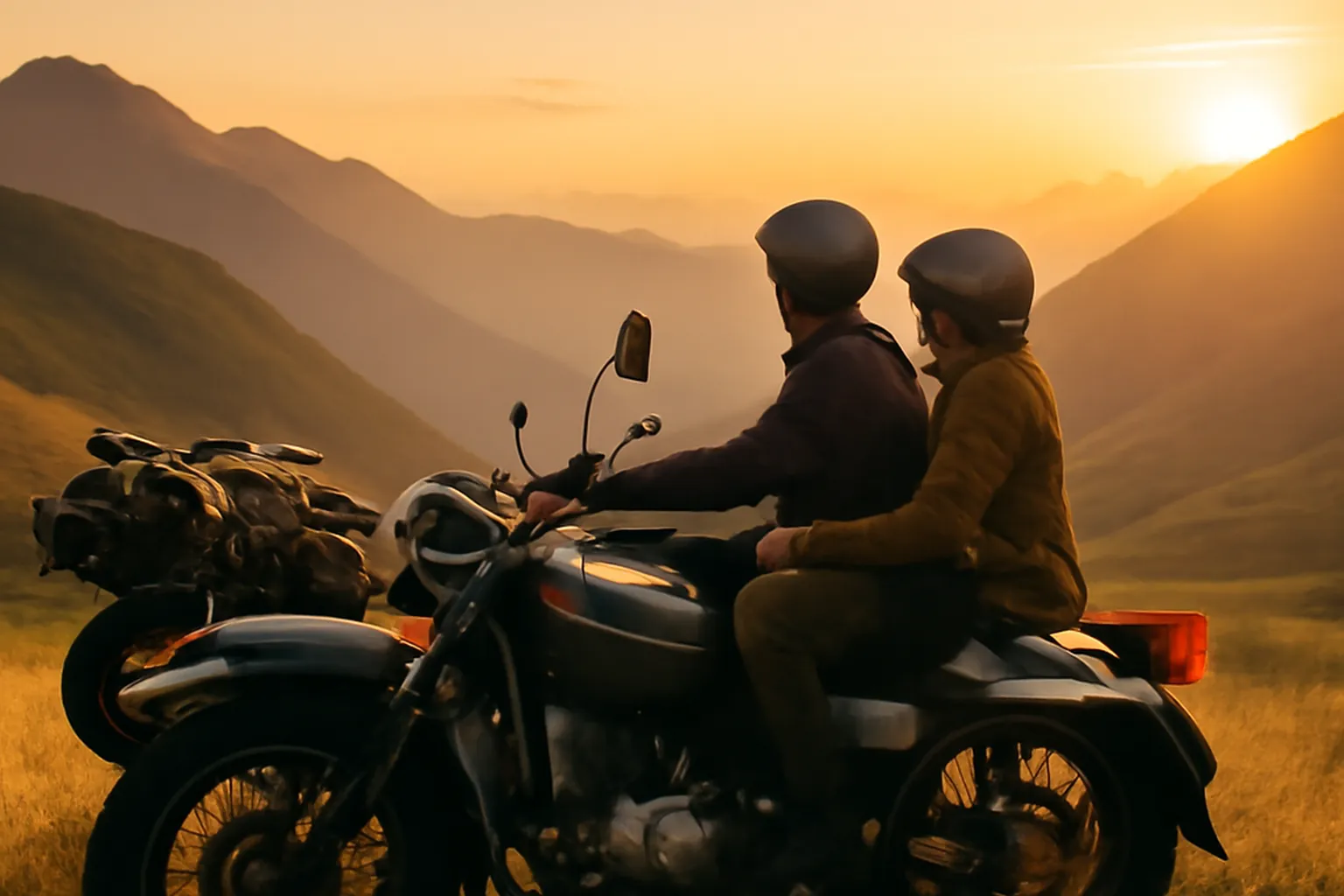
Travelling by Ural sidecar means choosing slow travel, secondary roads and authentic encounters. This guide compiles the essential advice for preparing your first big three-wheeled adventure.
The Ural as a Travel Companion
There’s something particular about travelling in an Ural sidecar. The rider’s position, slightly off to one side from the direction of travel, makes you view the world with a subtle offset. The passenger in the sidecar, seated facing the road, has an even more singular perspective: they see landscapes coming without anticipating them through a rear-view mirror. This isn’t motorcycle travel — it’s something else entirely.
The Ural’s cruising speed on national roads (80-90 km/h) imposes a pace that forces discovery. You see the landscape pass by at a human pace. You notice signs for small villages, bakeries open at 7am, farmers in their fields. Travelling by Ural is incompatible with rushing.
This rhythm is precisely what those who choose this machine are looking for. The worldwide network of Uralists is populated by people who have consciously decided to slow down, take secondary roads and accept that their itinerary might take a day longer than planned.
Key takeaway: Ural road trips reward a deliberate pace change — plan 200-350 km per day, not more. The reward for that restraint is genuine: unplanned roadside conversations, villages you’d otherwise drive past, and a community where breakdowns are met with solidarity rather than annoyance.
Best Roads in France for a Sidecar
France is extraordinary playground for Uralists. Its landscape diversity — from the Vosges to the Pyrenees, from Normandy to Provence — offers itineraries for all styles.
Alsace and Vosges: The Vosges ridgeline roads, with their moderate curves and panoramas over the Alsace plain, are ideal for a sidecar. The Alsace wine route also offers regular gastronomic stops.
Massif Central: The Aubrac, Margeride, Tarn gorges. Quiet roads, wild landscapes, stops in villages that seem timeless. The Massif Central is probably the most pleasant region of France for a Uralist.
Norman Coast: Along the coastline from Cherbourg to Dieppe, secondary roads hug the cliffs and pass through fishing villages. Road surface is generally good, traffic moderate outside summer.
Alpine Passes (with caution): Some Alpine passes are accessible on an Ural, particularly in good weather and out of season. The Grand Colombier or Galibier require good machine mastery and an Ural in perfect condition. Reserve these itineraries for experienced riders.
Preparing Your Travel Equipment
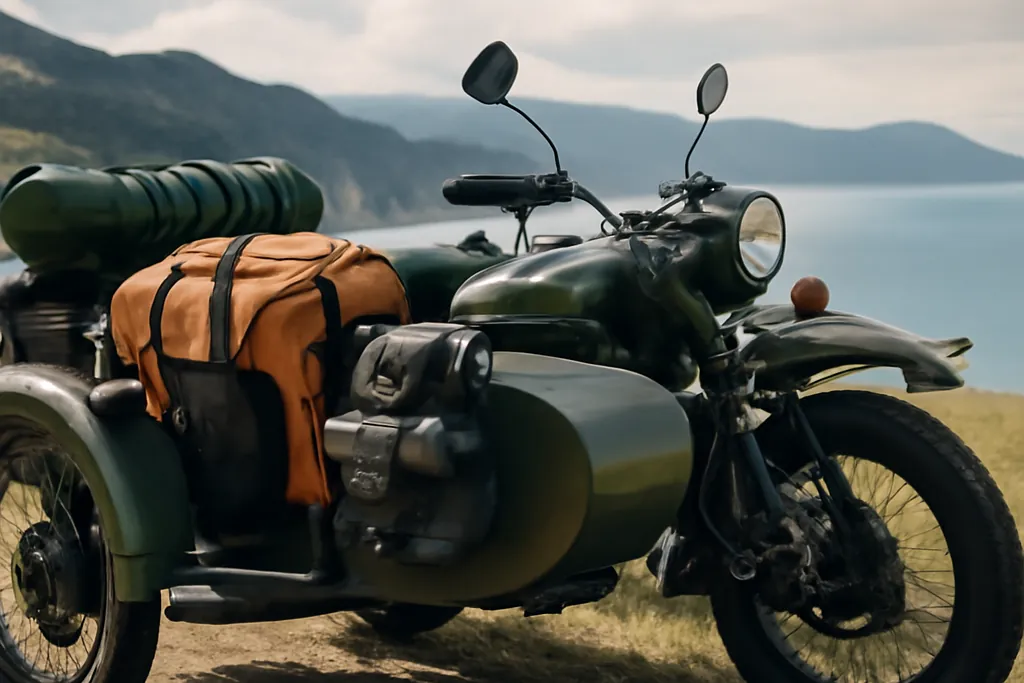
The sidecar of an Ural Gear Up offers approximately 80-100 litres of usable loading volume. By optimising the distribution, here’s what a Uralist can carry for a week:
Essentials: lightweight 1-2 person tent, season-appropriate sleeping bag, inflatable mat, compact gas stove, basic utensils.
Clothing and protection: motorcycle jacket, all-weather gloves, protective trousers, boots, full-face helmet for the rider (open car body possible, cycling or lightweight helmet for sidecar passenger).
Tools and safety: puncture repair kit, 24/26mm spanners and screwdrivers/Allen keys set, jump leads, light tow rope, warning triangle, first aid kit.
Recommended Itineraries from the Community
Brittany Loop (7 days): Depart from Rennes, complete circuit of the Armorican peninsula. Approximately 1,400 km. Points of interest: Pointe du Raz, Pink Granite Coast, Mont-Saint-Michel. Several bivouac or campsite options available.
Loire Valley Châteaux Route (4-5 days): From Nantes to Tours along the south bank, return via the north bank. Approximately 800 km. A very accessible itinerary for sidecar beginners.
Grand Massif Central Tour (10 days): Circuit departing from Clermont-Ferrand, crossing the Aubrac, Ardèche gorges, Lot and Cantal. The favourite circuit of many French Uralists. Approximately 1,800 km.
Toward the Pyrenees (8 days): From Bayonne to Perpignan via the Pyrenean foothills, with some forays into high mountains depending on weather. Approximately 1,200 km.
The Uralist Community: A Solidarity Network
One of the great charms of Ural travelling is the welcome strangers reserve for you. An Ural stopped on the roadside inevitably attracts curious onlookers. Conversations start naturally, with farmers, holidaymakers, local mechanics.
The official network of Ural clubs in Europe is very active. Club Ural France organises several annual gatherings, the most important being the “French Ural Meeting” (Ural-Fest) which generally gathers 50 to 100 machines in June. Similar gatherings exist in Germany (Ural Treffen), the UK, Belgium and the Netherlands.
The unwritten rule of Uralists: if you break down on the road and another Ural passes, they stop. Always. This mechanical solidarity is one of the most endearing aspects of sidecar culture.
Long-Distance Precautions
For trips over 5 days, some precautions are essential:
- Complete preventive service before departure (see our mechanical maintenance guide)
- Tyres in good condition — check wear and pressure before each stage
- Carry these parts: spare plugs, head gaskets, coolant hose (if applicable), brake and throttle cables
- Useful contacts: Ural service centres list, the Ural Club in each country
- Reserve budget: allow €200-400 for unexpected mechanical issues, as general mechanics don’t always know the Ural
Frequently Asked Questions
A comfortable day's travelling on an Ural sidecar corresponds to 200-350 km depending on terrain and stops. Beyond 400 km, fatigue from asymmetric driving and vibrations takes its toll. Most experienced Uralists prefer shorter stages (200-250 km) to enjoy the scenery and stop often.
The sidecar of a Gear Up has sufficient loading volume for light to moderate camping (lightweight tent, sleeping bag, stove, food for 3-4 days). The spare wheel, winch and 2WD drive allow access to remote sites inaccessible to cars. A multi-week wild camping road trip on an Ural is entirely feasible.
Yes, many owners have ridden their Ural across Europe (Paris-Vladivostok, France-Turkey, France-Scandinavia). Modern conditions are favourable: the reliability of recent Urals is good, spare parts are available in major cities, and the international community is very supportive. However, carry basic spare parts and contacts for Ural clubs in each country.
Passenger comfort in the sidecar is different from a car but better than riding pillion on a motorcycle. The seated position facing the road is original and much appreciated. On good surfaces, comfort is adequate. On cobblestones or tracks, the sidecar transmits more vibration than the motorcycle. A good seat pad and appropriate protective equipment significantly improve the experience.
Your home country insurance covers the EU as standard (green card). For travel outside the EU (Switzerland, Norway, Balkans, Russia, Morocco...), check with your insurer which countries are covered and take out an extension if necessary. As the Ural is an unusual vehicle, ensure your policy specifically covers the motorcycle + sidecar configuration.