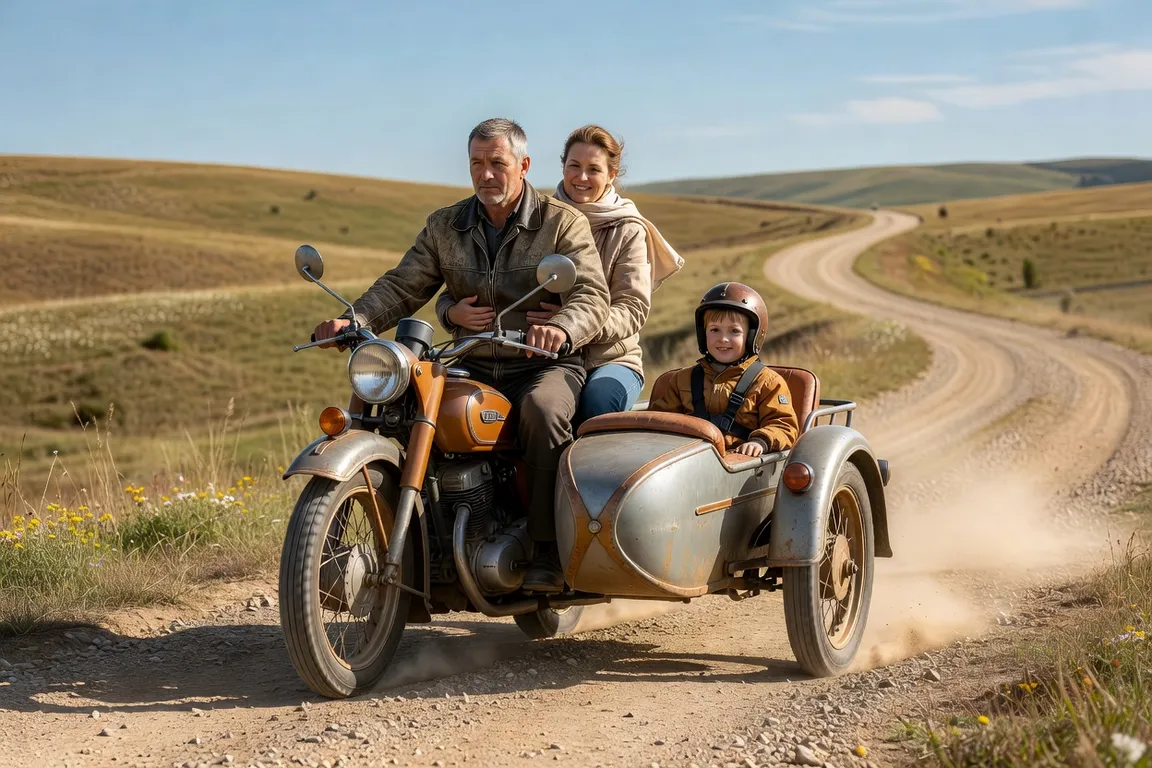
The Ural sidecar tub can comfortably carry a child on family outings, but doing this safely means specific setup, honest limits, and preparation this guide details in full.
A Question Every Ural Family Eventually Asks
Among the reasons riders are drawn to the Ural in the first place, the ability to bring a family member along in genuine comfort ranks high — the sidecar tub is spacious enough for an adult passenger, and it’s a natural question for parents in the community to wonder whether, and how, a child can safely join a ride too.
This is a genuinely different question from adult passenger comfort. A child’s physiology, judgment, and tolerance for vibration, wind, and confinement differ substantially from an adult’s, and the sidecar tub’s structural protection in a collision is meaningfully less than a car’s cabin. None of this means family sidecar travel is unwise — many Ural families do it regularly and report it as one of the most rewarding aspects of owning the machine — but it does mean doing it thoughtfully, with realistic preparation rather than assuming a scaled-down version of adult passenger setup is sufficient.
This guide draws together the practical safety questions, the setup work involved, and honest reporting from families who ride this way regularly.
What French Law Actually Requires — and Where It Falls Short
French regulation on sidecar passengers is comparatively minimal. The only universally mandated equipment for any sidecar occupant, adult or child, is an approved helmet correctly fitted and fastened. Unlike car transport, where child seats appropriate to age and weight are a strict legal requirement, no equivalent mandate exists for sidecar tubs.
This is worth stating plainly because it means the legal minimum is not the same as a responsible standard. A family choosing to bring a child in an Ural sidecar is, in practice, taking on the same safety planning responsibility a car seat regulation would otherwise assign by law — except here, it falls entirely on the parents’ judgment and preparation rather than a mandated checklist.
For context on the wider licensing and regulatory framework around Ural sidecars in France, our sidecar licence guide covers the driving qualification side of the picture, which is the other regulatory dimension every Ural family should already have settled before this question even arises.
Recommended Minimum Age: A Practical, Not Purely Legal, Answer
Because no fixed legal age threshold exists, the practical answer comes from a combination of physical and behavioural readiness rather than a single number.
Physical readiness: a child’s neck and head need to comfortably support an appropriately sized, properly fitted helmet for the duration of a ride without strain or discomfort — this typically rules out most children under about 4 years old regardless of other factors, simply because suitably small approved helmets that fit correctly are hard to find below this age, and a poorly fitted helmet is arguably worse than no clear guidance at all.
Behavioural readiness: beyond the physical minimum, a child needs to reliably stay seated, understand why the harness matters, and communicate discomfort or the need to stop. This varies enormously between individual children and is, in the judgment of most experienced sidecar families, the more important gating factor. Many families report waiting until a child is 6 or 7 before attempting longer outings, even if shorter trips began earlier.
There is no substitute for starting conservatively: a short 15-20 minute trip around familiar, quiet roads tells you far more about whether a specific child is ready than any age guideline can.
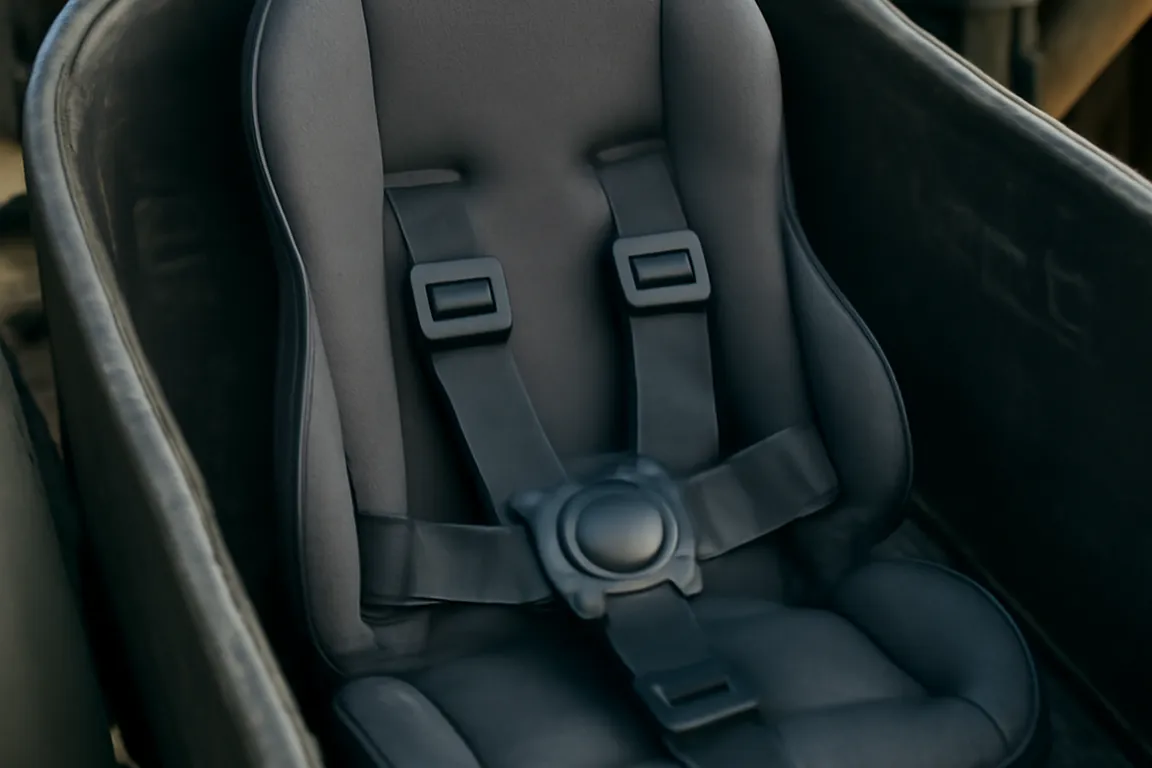
Setting Up the Sidecar Tub for a Child Passenger
Harness and Restraint
The single most important addition beyond the legally required helmet is a proper harness system. Aftermarket four- or five-point harnesses, adapted from racing harness principles and sized for sidecar tub dimensions, are available from sidecar accessory specialists and should be anchored to structural attachment points within the tub — never to trim, upholstery, or anything not rated to hold structural load in a sudden stop or impact.
A harness serves two purposes: it prevents a child sliding forward or sideways under braking or cornering, and it keeps a smaller child from being tempted to stand up or lean out, a real risk that adult common sense doesn’t automatically apply to a curious child enjoying the view.
Padding and Positioning
Additional side bolstering or firm padding reduces lateral movement over uneven surfaces and helps position a smaller child so they can see over the tub’s edge — both for their enjoyment of the ride and because being able to see the road ahead genuinely reduces motion sickness in many children, a factor worth taking seriously before a longer trip.
A firm cushion rather than a soft one is generally preferred: soft cushions compress and let a child sink lower into the tub over time, which both reduces visibility and can compromise harness fit as the seating position shifts.
Weather and Wind Protection
The tub sits low and exposed relative to a car cabin, and wind chill at even moderate riding speed is more significant than first-time sidecar parents typically expect — a mild day at rest can feel considerably colder at 60-70 km/h. A properly fitted windscreen or deflector reduces direct wind and road debris exposure to a child’s face, and layered clothing with a weatherproof outer layer for cooler or damp conditions is essential rather than optional.
Equally, in hot weather, the tub offers little natural shade, and a child can overheat without necessarily communicating it clearly — sun protection (hat, appropriate clothing, sunscreen) and planned shade stops matter as much as cold-weather preparation.
Trip Planning: What Experienced Families Actually Do Differently
Family experience reports consistently converge on a few practical patterns that differ from how adult passenger trips are typically planned:
Shorter trips, more frequent stops: where an adult passenger might comfortably ride 90 minutes to two hours between stops, most families report planning for stops every 30-45 minutes with young children, driven by the child’s lower tolerance for vibration, noise, and confinement rather than any mechanical necessity.
Starting close to home: the first several outings are best kept within easy reach of home or a familiar base, so that any discomfort, distress, or logistical problem (a forgotten item, weather change, a child needing a proper break) can be resolved quickly rather than requiring a long ride back.
Simple communication systems: normal conversation is essentially impossible over engine and wind noise once underway, so many families develop simple hand signals (thumbs up/down for comfort checks at traffic stops, an agreed signal for “I need to stop”) or invest in a basic intercom system, which several families report as one of the more valuable additions for peace of mind on both sides.
Building up gradually: rather than planning an ambitious first outing, most experienced families describe a progression — short local trips first, building toward half-day and eventually full-day outings only once both the child and the parents have a clear, tested sense of what works.
For families already comfortable with longer touring and looking to plan an actual family-friendly route across France, our dedicated guide to sidecar road trips in France covers route planning considerations that apply equally well once you’re confident about bringing a young passenger along.
Route and Terrain Considerations Specific to Family Trips
Smooth, well-maintained roads with realistic rest-stop intervals are a better choice for family outings with children than routes optimised purely for scenery or distance. The Gear Up’s off-road capability, appealing as it is to many owners, introduces jolting and rougher handling that’s best reserved for once a child is older and already comfortable and confident on smoother road touring — introducing rough terrain on an early family outing is a commonly cited mistake among experienced families reflecting on their own early trips.
Mountain routes and routes with limited services also deserve extra caution with children aboard: the reduced margin for improvisation if a child needs an unplanned stop, a change of clothing, or simply a longer break than expected is worth building into route planning from the outset rather than discovering the constraint mid-trip.
Communication and Consent: Involving the Child in the Plan
Several family accounts emphasise something easy to overlook amid the technical safety preparation: involving the child in understanding what to expect before the first ride meaningfully improves the experience. A simple, honest explanation — it will be windy, it will be loud, we’ll stop often, here’s the hand signal if you want to stop — gives a child a sense of agency that pure physical safety measures don’t address on their own.
Children who understand the harness is there to keep them safe (rather than experiencing it as an arbitrary restriction) and who know a stop is always available on request tend, by most family accounts, to settle into the experience more readily and enjoy it more.
Choosing the Right Machine for Family Use
Not every Ural configuration is equally suited to family outings with children. The Tourist, with its simpler single-drive setup and generally smoother road manners, is often the more forgiving choice for a family’s early outings compared to the Gear Up, whose 2WD capability and off-road-oriented suspension tuning can translate into a slightly firmer, busier ride on ordinary tarmac — a difference an adult passenger barely notices but a young child in the tub often feels more acutely.
If you’re still deciding which model suits your family’s plans, or considering a used purchase specifically with family outings in mind, our comprehensive Ural Gear Up 2026 review covers the ride characteristics in detail, including the trade-offs between the Gear Up’s off-road versatility and the smoother-riding alternatives in the current range — a useful comparison point when the priority is a comfortable, predictable ride for a young passenger rather than outright capability.
Legal Responsibility and Insurance Considerations
Beyond the helmet requirement already discussed, parents should also confirm their insurance policy explicitly covers a minor passenger in the sidecar, since some policies are written with adult passenger assumptions and may require an explicit rider or endorsement to cover a child clearly. This is a five-minute phone call worth making before a first family outing rather than an assumption worth carrying into it.
It’s also worth checking whether your specific vehicle registration and licence category — covered in detail in our sidecar licence guide — carries any passenger-related restrictions, though in practice the standard category B licence that covers most Ural sidecars imposes no additional restriction specific to carrying a child passenger beyond the general helmet and safe-conduct rules that apply to any occupant.
Building Confidence Over a Full Riding Season
Family accounts consistently describe family sidecar travel with children as something that improves markedly over a season of gradual, consistent exposure rather than something that clicks immediately on a first outing. A child who seems hesitant or uncertain on an early short trip frequently becomes an enthusiastic, confident passenger after several more relaxed, well-paced outings — the unfamiliarity of the noise, wind, and motion fades with repetition in a way that’s hard to shortcut by planning alone.
Parents who track this progression informally — noting what worked, what didn’t, how long the child stayed comfortable, which routes or conditions caused any hesitation — tend to plan increasingly ambitious outings with real confidence rather than guesswork, turning what began as a cautious first ride into a genuine shared family activity built on accumulated, first-hand experience of what that particular child actually enjoys and tolerates well.
A Realistic Summary Checklist
Before a first family sidecar outing with a child, experienced Ural families’ collective advice converges on:
- Properly fitted, age-appropriate approved helmet — non-negotiable and the only strict legal requirement, but treat it as the floor, not the whole plan
- A proper harness anchored to structural tub points, not an improvised alternative
- Firm padding positioned so the child can see over the tub’s edge
- A windscreen or deflector adjusted for the child’s height
- Weather-appropriate layered clothing, both for cold wind chill and hot-weather sun exposure
- A short first trip (15-20 minutes) before any longer outing is attempted
- A simple, agreed communication method for comfort checks and stop requests
- Smooth road routes for early trips, off-road left for later once confidence is established
Families researching the broader travel culture around Ural touring in France and neighbouring regions sometimes also find value in Association Ruslan, a community resource covering Franco-Russian cultural exchange that occasionally intersects with the touring routes many Ural families favour through regions with historical or cultural connections. For further reading on the cultural dimension of Ural touring, Gazeta France-Oural also covers family and community stories from across the ownership base.
Packing for a Family Sidecar Trip: What Actually Fits
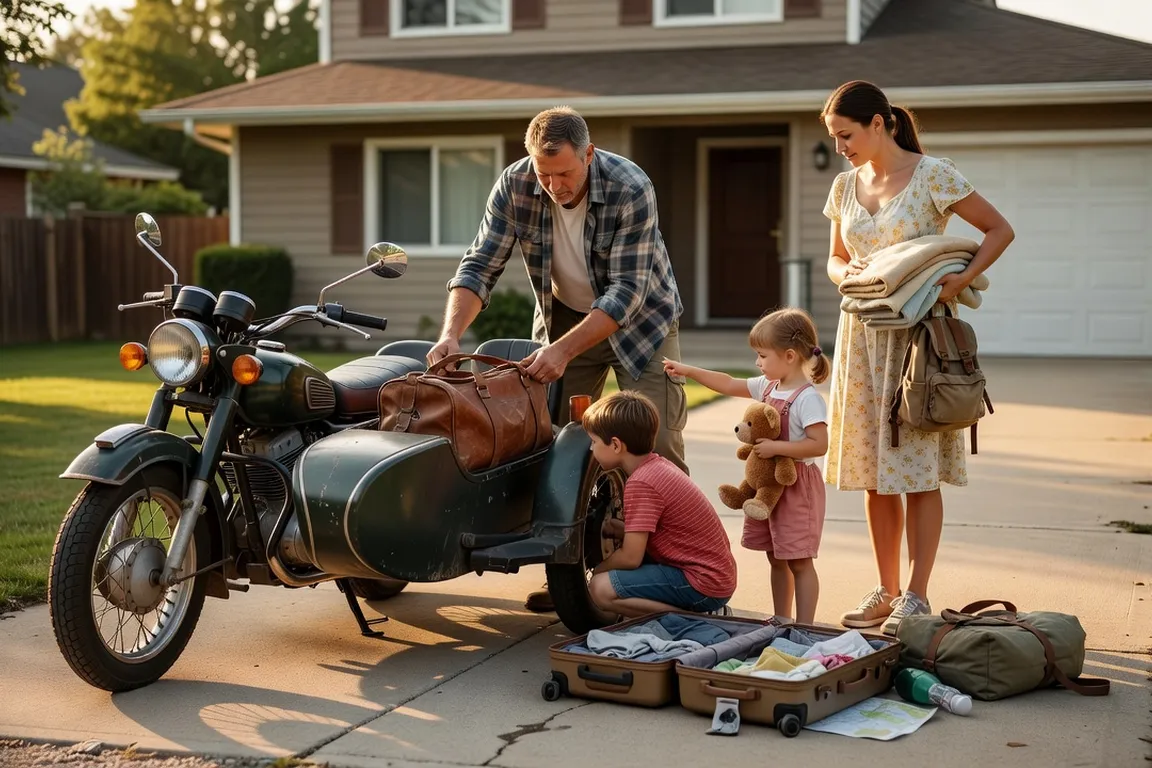
The Ural sidecar tub’s generous volume is one of the platform’s genuine advantages for family travel, but packing for a trip with a child aboard requires different priorities than packing for an adult passenger or solo touring. Experienced families report that soft-sided bags conforming to the tub’s curved contours waste far less usable space than rigid luggage, leaving more room for the child’s own seating position and immediate-access items.
A small, easily reachable bag for items needed mid-ride — snacks, a spare layer, wet wipes, a favourite small toy or comfort object — kept separate from the main luggage stowed further back or in the motorcycle’s own panniers, saves the family from having to stop and dig through the entire load every time the child needs something. Families with younger children also commonly report bringing a lightweight, packable groundsheet or blanket for rest stops, since roadside stops with a young child often mean sitting on the ground rather than standing around, particularly on longer breaks.
Involving Grandparents and Extended Family Safely
Many Ural families extend the sidecar experience beyond parents and children to include grandparents or other relatives, and the same principles of honest readiness assessment apply just as much to an older adult passenger as to a young child, even if the specific concerns differ. Mobility, hearing sensitivity to sustained engine noise, and comfort tolerating vibration over longer distances are worth discussing candidly before a first outing, rather than assuming any adult passenger has the same tolerance as a younger, more flexible rider.
Families who regularly include grandparents in sidecar outings report the same lessons apply: start with a short trip, build up gradually, and treat any hesitation or discomfort as useful information rather than something to push through for the sake of a planned itinerary. A shared family activity across generations is part of what makes Ural ownership distinctive within the wider motorcycling community, and the same careful, incremental approach that works for introducing a child to the sidecar tends to work just as well for an older family member trying it for the first time. Our interview with a family who completed a full sidecar road trip offers a real-world account of exactly this kind of multi-generational planning in practice.
Conclusion: Rewarding, But Not a Scaled-Down Adult Setup
Family travel with children in an Ural sidecar can be a genuinely rewarding way to introduce the next generation to the platform’s particular charm, and many families in the community do it happily and safely. But it requires treating the child passenger as a distinct case with its own preparation, not simply a smaller version of adult passenger comfort — the harness, the padding, the pacing of trips, and above all the honest, ongoing assessment of an individual child’s readiness all deserve deliberate attention rather than assumption.
Start small, prepare properly, and let the child’s own comfort and enthusiasm — not a fixed age or a single trip’s ambition — set the pace for how quickly the family builds toward longer Ural adventures together.
Frequently Asked Questions
There is no single legal minimum age specific to sidecar passengers in France beyond the general rule that a child must be able to safely wear an approved helmet, which in practice means most manufacturers and safety-conscious riders set an informal minimum around 4-5 years old, once a child's neck and head can properly support an appropriately sized helmet for extended periods. Beyond the helmet question, the more important criterion is the child's ability to remain seated and follow basic instructions (staying still, not standing up, understanding why the harness matters) for the duration of the ride — a criterion that varies by individual child more than by a fixed age threshold. Many experienced sidecar families wait until a child is 6-7 and can clearly communicate discomfort or a need to stop before undertaking longer outings.
French regulations do not mandate a car-seat-equivalent restraint system for sidecar passengers, including children, the way they do for cars — only an approved helmet is legally required for any sidecar occupant. This regulatory gap does not mean a harness is unnecessary: it means responsible parents must go beyond the legal minimum and fit appropriate restraint themselves, since the sidecar tub offers considerably less structural protection than a car's cabin in the event of a collision or sudden stop. Aftermarket harness systems designed for sidecar tubs, adapted from four- or five-point car racing harness principles, are widely available from sidecar accessory specialists and are strongly recommended by every experienced sidecar family and most dealers, even though they are not a legal obligation.
A proper setup starts with a secure, properly fitted harness anchored to structural points in the tub (not to trim or upholstery), padded side bolsters or additional cushioning to reduce lateral movement over rough surfaces, and a windscreen or deflector adjusted to reduce wind and debris exposure to the child's face and upper body. Temperature management matters more than many first-time sidecar parents expect: the tub sits low and can be considerably cooler than expected even in mild weather due to wind chill at speed, so layered clothing and a weatherproof cover for cooler or damp conditions are essential rather than optional. A firm, supportive cushion rather than a soft one helps a smaller child see over the tub's edge and stay engaged with the ride rather than sliding down into the footwell.
Recurring themes across family experience reports include starting with short trips (20-40 minutes) before attempting longer outings, so both the child and the parents can gauge comfort and communication before committing to a full day's touring. Families consistently emphasise frequent stops — more frequent than an adult passenger would need — since a child's tolerance for vibration, noise, and confinement in the tub is lower and less predictable than an adult's. Most report that clear, simple hand signals or a basic intercom system for communication between rider and child passenger substantially improves the experience for everyone, since normal conversation is impossible over engine and wind noise at speed.
Yes — avoid extreme heat exposure (the tub offers little shade and a child can overheat faster than an adult would notice in themselves), avoid genuinely poor weather for a child's first several outings until the family has a baseline sense of the child's tolerance, and choose routes with realistic rest-stop intervals rather than optimising purely for distance covered. Off-road or rough-terrain routes, appealing as they are on a Gear Up with 2WD, are best reserved for once a child is older and has already built confidence and comfort on smoother road touring — introducing bumpy, jolting terrain on a first sidecar outing with a young child is a common mistake experienced families warn against.