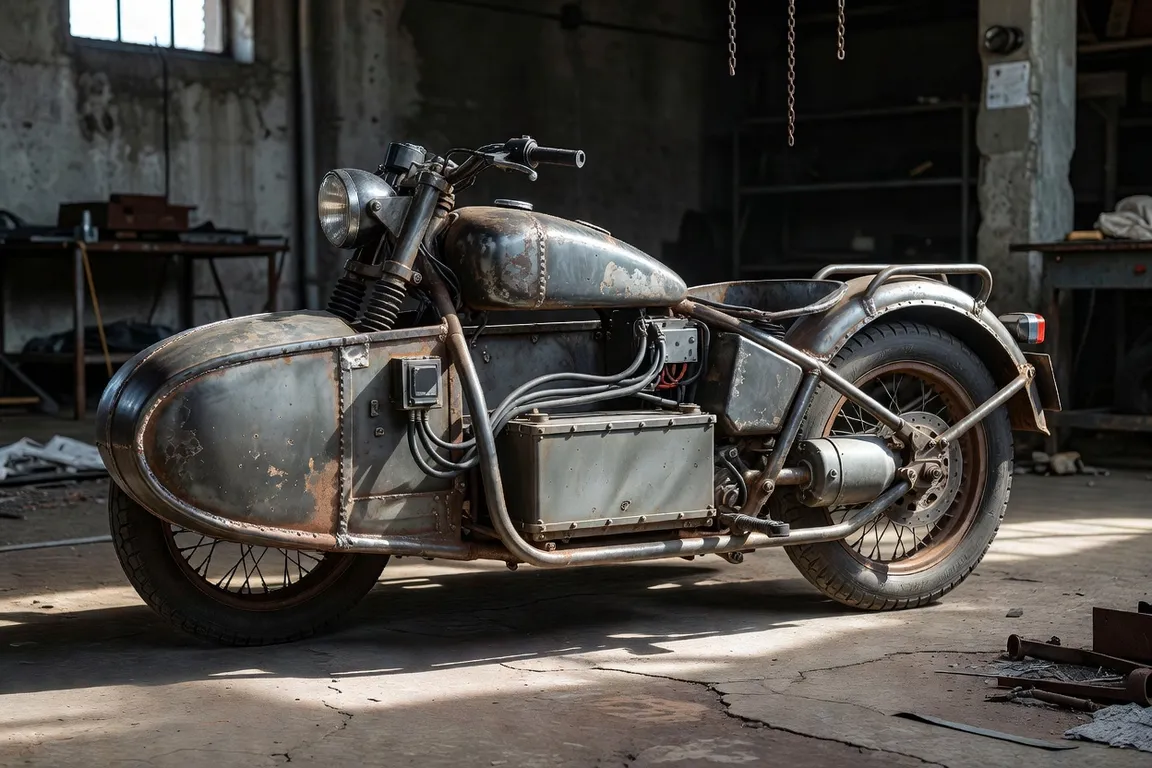
Electric powertrains keep surfacing in Ural owner forums, but separating documented prototypes from wishful speculation requires a careful, factual look at what's technically plausible and what remains rumour.
Why the Question Keeps Coming Up
Every few months, a new thread appears on Ural owner forums asking some version of the same question: is an electric Ural coming? The question is understandable. Nearly every legacy motorcycle manufacturer has at least explored electrification in some form over the past decade, and the sidecar’s distinctive three-wheel layout seems, on the surface, well suited to carrying a battery pack.
But separating documented fact from enthusiast speculation matters here more than in most corners of motorcycle news. This article lays out what is actually known, what remains genuinely uncertain, and why the Ural’s specific use case — rugged, long-distance, often off-grid touring — makes the electrification question harder than it looks for this particular platform.
What We Actually Know About Official Prototypes
As of 2026, no confirmed production electric Ural exists, and no official manufacturer announcement has specified a release date, price, or firm specification. This is worth stating plainly because online searches surface a mix of enthusiast renderings, speculative articles, and occasional patent filings from entirely unrelated companies that get conflated with genuine Ural development.
Readers encountering specific claims — a named model, a stated range figure, an announced launch year — should treat these with scepticism unless traced back to an official distributor or manufacturer communication. The pattern of unverified rumour circulating faster than confirmed information is common across the motorcycle industry generally, and the Ural’s small, close-knit but geographically scattered owner community appears particularly prone to amplifying speculative content.
Why Electric Power Is Theoretically Interesting for a Sidecar
Setting aside the question of whether it will actually happen, it’s worth examining why an electric powertrain is theoretically well matched to a sidecar platform.
Instant torque at low speed: the Ural’s air-cooled boxer twin, while characterful, has never been praised for eager low-speed pulling power, particularly when loaded with a passenger and luggage in the sidecar. Electric motors deliver maximum torque from zero RPM, which would address one of the platform’s longest-standing rider complaints — sluggish acceleration from a standstill, especially uphill with a full sidecar.
Weight distribution flexibility: unlike a solo motorcycle, where battery placement is constrained by a narrow frame, a sidecar’s structure offers considerably more volume for battery packs positioned low and wide across the chassis. This could, in principle, improve rather than worsen the handling balance — a genuine engineering opportunity that doesn’t exist for most two-wheeled EV conversions.
Reduced maintenance complexity in some respects: no valve adjustments, no carburettor or injector servicing, no oil changes on the traditional schedule. For owners who value the Ural precisely because they can service it themselves, this cuts both ways — some maintenance tasks disappear, but the platform’s appeal partly rests on mechanical simplicity that a battery-electric powertrain, with its own high-voltage safety requirements, doesn’t straightforwardly replicate.
The Range Problem: Why This Matters More for a Ural Than Most Bikes
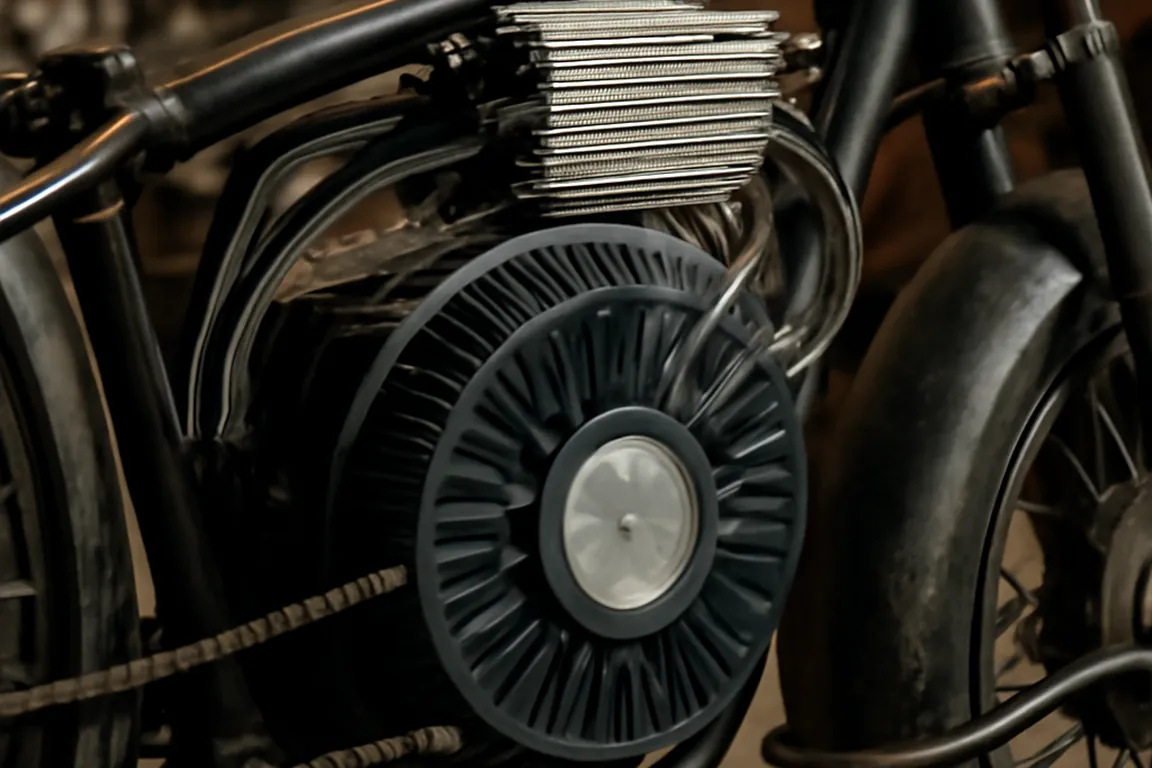
Range is the central sticking point for any electric touring vehicle, but it’s an especially acute problem for a machine bought specifically for the kind of travel Ural owners favour.
Ural buyers overwhelmingly cite long-distance rural touring, off-road excursions on forest tracks, and multi-day cross-country trips as core use cases — precisely the scenarios where charging infrastructure is least reliable. A Tourist or Gear Up owner heading into rural France, the Balkans, or off-grid terrain routinely rides hundreds of kilometres between fuel stops that, while occasionally sparse, are still far more common and far faster to use than a charging point would be in the same regions.
Most electric motorcycles currently on the market target urban or suburban commuting, with realistic ranges of 100-200 km and charging times measured in hours rather than minutes. Adapting this to the Ural’s rural, long-range touring use case would require either a substantially larger and heavier battery pack (working against the very weight savings and packaging advantages sidecars theoretically offer) or a fundamental repositioning of the machine away from its traditional touring identity.
This tension — a platform defined by rural and off-grid capability meeting a powertrain technology currently optimised for urban range profiles — is arguably the single biggest reason a credible factory electric Ural has not yet materialised, whatever forum speculation might suggest. Riders curious about the platform’s current real-world range on petrol should see our Ural Gear Up 2026 review, which documents actual fuel range figures under mixed touring conditions.
How Amateur Electric Conversions of Vintage Bikes Compare
A useful reference point, since no factory electric Ural exists yet, is the well-established hobbyist scene converting vintage motorcycles to electric power. Classic BMW airheads, older Triumphs, and vintage Japanese fours have all been subjects of well-documented amateur EV conversion projects for years.
The typical approach: remove the internal combustion engine and gearbox, retrofit a mid-mounted electric motor coupled to the original final drive where possible, install a controller, and pack the available frame space (often including the original fuel tank cavity) with battery cells. Range in these builds is usually modest — commonly 60-100 km — reflecting the practical limits of squeezing batteries into a frame never designed to hold them.
These conversions prioritise preserving the vintage look and riding experience over long-range capability, which is a reasonable trade-off for a hobbyist building a city runabout or show bike. A hypothetical factory electric Ural aimed at genuine touring use would need to solve the same fundamental problem — batteries are heavy and range costs weight and money — but with considerably more engineering resources and, presumably, a purpose-built structure rather than a retrofit into an existing chassis designed around a boxer engine.
For owners of existing petrol Urals curious about the platform’s mechanical character that any electric variant would need to reckon with, our technical maintenance guide covers exactly the kind of hands-on servicing that partly explains why the current air-cooled powertrain remains popular despite its age.
Independent and Hobbyist Projects on the Ural Platform Specifically
Beyond vintage-bike conversions generally, a small number of independent workshops and individual owners have reportedly experimented with electric or hybrid conversions specifically on Ural sidecars, generally as one-off personal projects rather than any kind of supported commercial product.
Given the strength of the Ural owner community’s DIY maintenance culture — a recurring theme across every corner of this platform’s fanbase — it would not be surprising to see more such experimental builds documented in the coming years. But as of 2026, there is no turnkey, warrantied electric conversion kit available for the Ural, and anyone considering such a project should approach it with the same caution appropriate to any from-scratch electrical engineering undertaking involving high-voltage battery systems.
What a Realistic Electric Ural Might Actually Look Like
If a manufacturer did eventually pursue a production electric Ural, the more plausible path, based on how other manufacturers have approached electrifying rugged or utility-oriented platforms, would likely involve:
- A repositioning toward shorter regional touring and utility use rather than the multi-day cross-country trips currently associated with the brand
- A hybrid or range-extended approach (a small combustion generator supplementing battery range) rather than pure battery-electric, addressing the range anxiety concern directly
- Retention of the sidecar’s mechanical simplicity philosophy in other respects — simple electronics, accessible components, minimal reliance on manufacturer-specific diagnostic tools — to preserve the DIY-friendly character owners value
None of this is confirmed manufacturer strategy; it is informed speculation based on how comparable rugged-utility platforms elsewhere in the industry have approached electrification challenges. Readers should continue to treat any more specific claim about an imminent Ural EV with the scepticism it deserves until an official source confirms otherwise.
How This Compares to Rival Sidecar Manufacturers
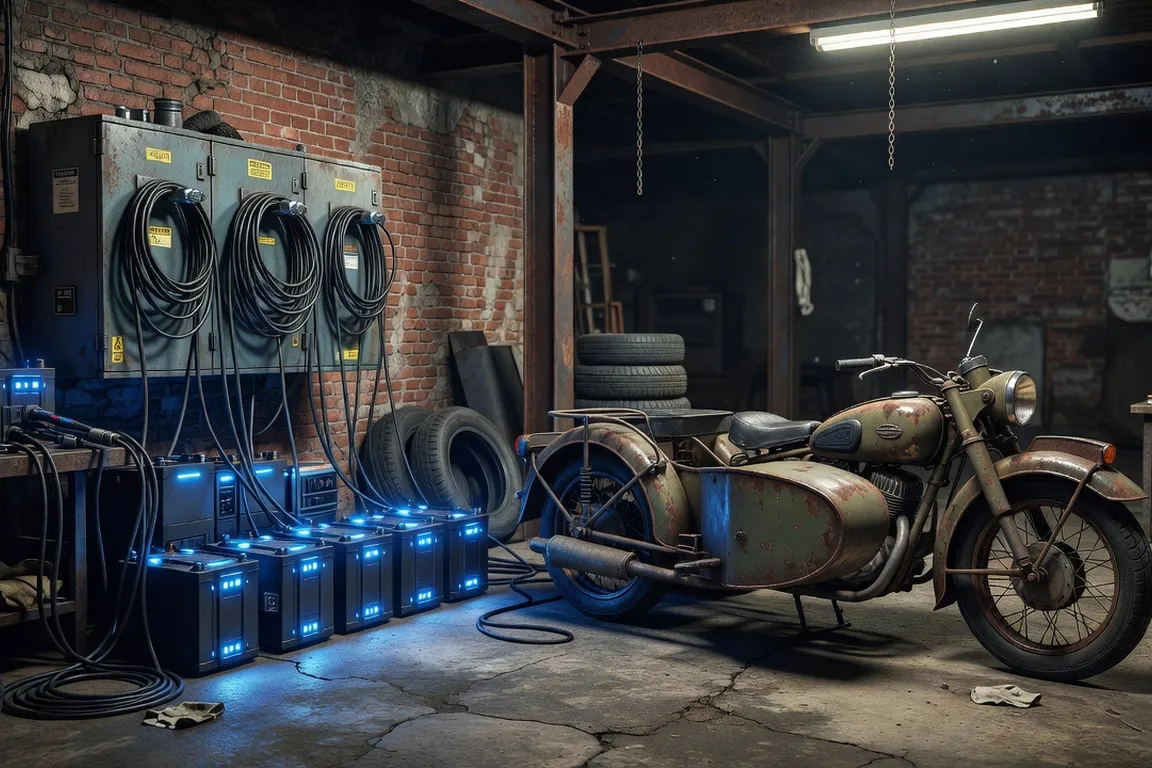
The Ural is not the only sidecar platform on the market, and it’s worth briefly considering how the electrification question looks across the wider category. Our detailed Ural vs BMW sidecar comparison covers how the two philosophies differ on the combustion side — broadly, BMW-based sidecar conversions lean toward refinement and modern electronics, while the Ural leans deliberately toward mechanical simplicity and rebuildability.
That same philosophical split would likely carry over into any electrification effort. A BMW-platform sidecar conversion, already built around a more electronically sophisticated donor motorcycle, would probably integrate a factory or semi-factory EV powertrain more readily than the Ural, whose entire brand identity rests on being simple enough to fix with basic tools far from a dealer. This is precisely the tension discussed above: electrification tends to trade mechanical simplicity for electronic complexity, and for the Ural specifically, that trade cuts against a core part of what owners value about the platform in the first place.
What Current Ural Owners Say About the Idea
Sentiment among current owners, gathered informally from club discussions and rider meetups, is notably mixed rather than uniformly enthusiastic. Some owners — particularly those using the Ural primarily for shorter regional trips or urban-adjacent riding — express genuine interest in an electric variant, citing quieter operation and reduced maintenance as attractive.
Others, especially those who prize the platform specifically for long-distance, off-grid touring capability, are more skeptical, pointing to exactly the range and charging-infrastructure concerns discussed earlier in this article. Our interview with members of a French Ural owners’ club touches on this generational and use-case divide within the community more broadly — a useful read for understanding how attached different segments of the ownership base are to the current powertrain versus how open they might be to change.
This divide matters for how a hypothetical manufacturer decision might play out commercially: an electric Ural aimed squarely at the platform’s traditional long-range touring buyer would need to solve range concerns convincingly to win over the segment most invested in the brand’s core identity, while a shorter-range, urban-oriented electric variant might find a genuinely receptive audience among a different, newer segment of potential buyers who value the sidecar’s practicality and character without necessarily sharing the same touring priorities.
Regulatory and Insurance Questions an Electric Ural Would Raise
Beyond the engineering and market questions, a production electric Ural sold in France would need to navigate a somewhat different regulatory path than the current petrol models. High-voltage battery systems bring additional type-approval requirements under EU vehicle regulations, and insurance products for electric motorcycles and sidecars, while increasingly common, are not yet as standardised or as widely understood by brokers as combustion-vehicle policies.
For context on how the current petrol Ural is classified and insured under French regulation, our guide to the sidecar driving licence in France explains the L5e category framework that governs the existing machines — a framework that would very likely still apply to an electric variant of similar weight and dimensions, though battery-specific safety certification would add an additional regulatory layer not required for the current combustion models.
Comparing Petrol Ural, Hypothetical Electric Ural, and Amateur EV Conversions
| Characteristic | Current petrol Ural | Hypothetical factory electric Ural | Amateur vintage-bike EV conversion |
|---|---|---|---|
| Range for rural touring | 180-220 km per tank, fast refuel | Uncertain — likely constrained without major battery investment | Typically 60-100 km, long recharge |
| Low-speed torque | Modest, a known weak point | Likely strong (inherent EV advantage) | Strong but rarely the build’s priority |
| Owner-serviceability | High — a core part of platform appeal | Uncertain — depends on design philosophy chosen | Variable, depends on builder’s documentation |
| Availability in 2026 | Current production | Not confirmed, no release date | Individual hobbyist projects only |
| Suited to off-grid touring | Yes, established use case | Questionable without range breakthrough | No, generally built for short urban use |
Staying Informed Without Falling for Speculation
For readers who want to follow this topic responsibly, the most reliable approach is to treat any claim about a forthcoming electric Ural the same way you would treat any unconfirmed industry rumour: check whether it traces back to an official manufacturer or authorised distributor statement, and be wary of specific dates, prices, or specifications attributed to anonymous sources or unverified social media posts.
For broader coverage of how the Ural brand and its distribution network are evolving more generally in the current geopolitical and industrial context, Gazeta France-Oural offers ongoing coverage that complements the more narrowly technical focus of this article. Readers interested in the wider industrial heritage that shapes the platform’s engineering philosophy may also find Heritage Russe a useful complementary resource on Soviet-era manufacturing traditions.
What Battery Chemistry Choices Would Mean for a Sidecar Platform
One technical detail rarely discussed in forum speculation is which battery chemistry a hypothetical electric Ural would realistically use, and how that choice would ripple through the rest of the design. Lithium iron phosphate (LFP) cells, increasingly common in electric two-wheelers, offer a safety and longevity advantage over higher-density nickel-based chemistries — an important consideration for a platform whose owners are accustomed to keeping machines running for decades with basic maintenance, not the shorter replacement cycles typical of consumer electronics.
The trade-off is energy density: LFP packs are heavier for a given range than nickel-based alternatives, which would push a hypothetical electric Ural further toward the shorter-range, regional-use scenario already discussed rather than long-distance touring. A manufacturer prioritising the platform’s reputation for longevity and owner-serviceability would likely accept this weight penalty rather than opt for a higher-density chemistry that degrades faster and poses greater fire-safety complexity for an owner base that regularly self-services its machines far from professional workshops.
Thermal Management: An Overlooked Engineering Hurdle
Battery thermal management is another area where the Ural’s traditional use case complicates a straightforward electrification path. Owners routinely ride in extreme conditions — deep winter cold on Alpine routes, or sustained heat during summer touring in southern Europe — and lithium battery packs perform and age poorly at both temperature extremes without active thermal regulation.
An air-cooled combustion engine tolerates this range with only modest performance variation, which is part of why the Ural remains popular for genuinely all-season, all-terrain use. A battery pack without a dedicated heating and cooling system would see meaningfully reduced range and accelerated degradation in exactly the winter riding conditions some Ural owners specifically seek out — a further engineering cost that any credible electric variant would need to absorb, adding weight, complexity, and cost that cut against the platform’s traditionally simple, rugged character. Owners already riding petrol Urals through genuine winter conditions can find practical, tested advice in our cold-weather riding guide, which covers exactly the temperature extremes discussed here from a current-technology standpoint.
What Owners Considering a DIY Conversion Should Weigh Up First
For an owner tempted to attempt an independent electric conversion rather than wait for a factory solution, a realistic self-assessment matters more than enthusiasm alone. High-voltage battery work carries genuine safety risk that differs qualitatively from the low-voltage electrical systems most Ural owners are comfortable troubleshooting themselves — a mistake with a fuel line is inconvenient, while a mistake with a poorly insulated high-voltage pack can be dangerous in ways that are harder to diagnose after the fact.
Owners seriously considering this route are generally better served starting with a proper electrical engineering course or working alongside someone with documented high-voltage conversion experience, rather than treating it as an extension of the same self-taught mechanical skills that make the platform’s combustion engine so approachable. The gap between “confident with a wrench” and “confident with a battery management system” is real, and the community’s DIY culture, however strong, does not automatically transfer across that gap without deliberate additional learning.
Conclusion: A Genuinely Open Question, Not a Confirmed Roadmap
The electric Ural remains, as of 2026, a topic of legitimate technical interest and recurring community speculation rather than a confirmed product. The theoretical case for electrifying a sidecar platform is real — low-speed torque and flexible battery packaging are genuine advantages — but the practical mismatch between current EV range profiles and the Ural’s core rural touring use case is a substantial engineering problem that has not yet been publicly solved by any manufacturer.
Owners and prospective buyers are best served by following official channels for any confirmed announcement, while treating the current landscape of hobbyist conversions and forum speculation as exactly that: an interesting but unconfirmed corner of the platform’s future, worth watching rather than acting on.
Frequently Asked Questions
No production electric Ural has been officially launched or confirmed with a release date as of 2026. Various prototype sketches, patent filings from adjacent sidecar manufacturers, and enthusiast mock-ups circulate periodically on social media and specialist forums, but none of these constitute a confirmed manufacturer roadmap. Readers should treat any specific release date or specification seen online with considerable scepticism until an official announcement appears through recognised distributor channels.
Technically, yes — electric powertrains are well suited in principle to a heavy three-wheeled vehicle: instant torque helps with the Ural's traditionally weak low-speed pulling power, and the sidecar's structure has room for battery packs low in the chassis, which could even improve the handling balance that stock Urals are sometimes criticised for. The harder problems are practical: achieving a usable range for the kind of long, rural touring the Ural is bought for, keeping weight and cost within reach of the platform's traditionally modest price point, and matching the air-cooled boxer engine's simplicity — a major part of the Ural's appeal to owners who value being able to fix it themselves roadside.
Amateur EV conversions of vintage motorcycles (a well-established hobby, particularly for classic BMWs, Triumphs and Japanese fours) typically retrofit a mid-mounted electric motor, a controller, and a battery pack into the original frame, usually sacrificing significant range (often 60-100 km) for the sake of preserving the vintage look and riding position. A hypothetical factory electric Ural would very likely take a more integrated approach — purpose-built battery placement across the sidecar's structure, rather than shoehorning components into a frame designed around a boxer engine — but would face the same fundamental range-versus-weight-versus-cost trade-off that amateur builders navigate today, just at a larger engineering budget.
This is the central unresolved question. Ural owners typically use their machines for extended rural touring, off-road excursions, and long-distance travel where charging infrastructure is sparse or non-existent — precisely the use case where current EV range and charging-time limitations are most exposed. A realistic electric Ural aimed at this audience would need either a substantially larger battery than is common in electric motorcycles today (adding weight and cost) or a shift in how the machine is marketed and used, toward shorter regional trips rather than the multi-day cross-country routes the platform is currently known for.
Short of an official factory electric model, current options for an owner interested in alternative powertrains are limited and mostly experimental: a handful of independent workshops and hobbyists have attempted electric or hybrid conversions of Ural sidecars, generally as one-off projects rather than a supported aftermarket product. Given the platform's mechanical simplicity and strong owner community around DIY maintenance, it would not be surprising to see more such projects documented in coming years, but as of 2026 there is no turnkey, warrantied electric conversion kit available for the Ural specifically.